
For fifth-generation farmer Garrett Asmus of Rake, Iowa, finding the right approach to strip-till has been a process of learning, adapting and making decisions that work for his operation. Farming alongside his dad, Harlan, in north-central Iowa, they have spent more than two decades refining their strip-till practices. And for the past 10 years, SoilWarrior® has been part of that process.
His strip-till story began in 2002, when the family worked with an experienced custom operator who taught them the strip-till ropes before making a larger investment. When it was time to buy, the Asmus family shopped around and found SoilWarrior. Two things stood out right away.
“We were just impressed with the coulter system and how it handled residue,” Garrett says. He also liked the weight transfer. Once the bar is in the ground and running, it transfers weight off the cart, which reduces compaction even more.
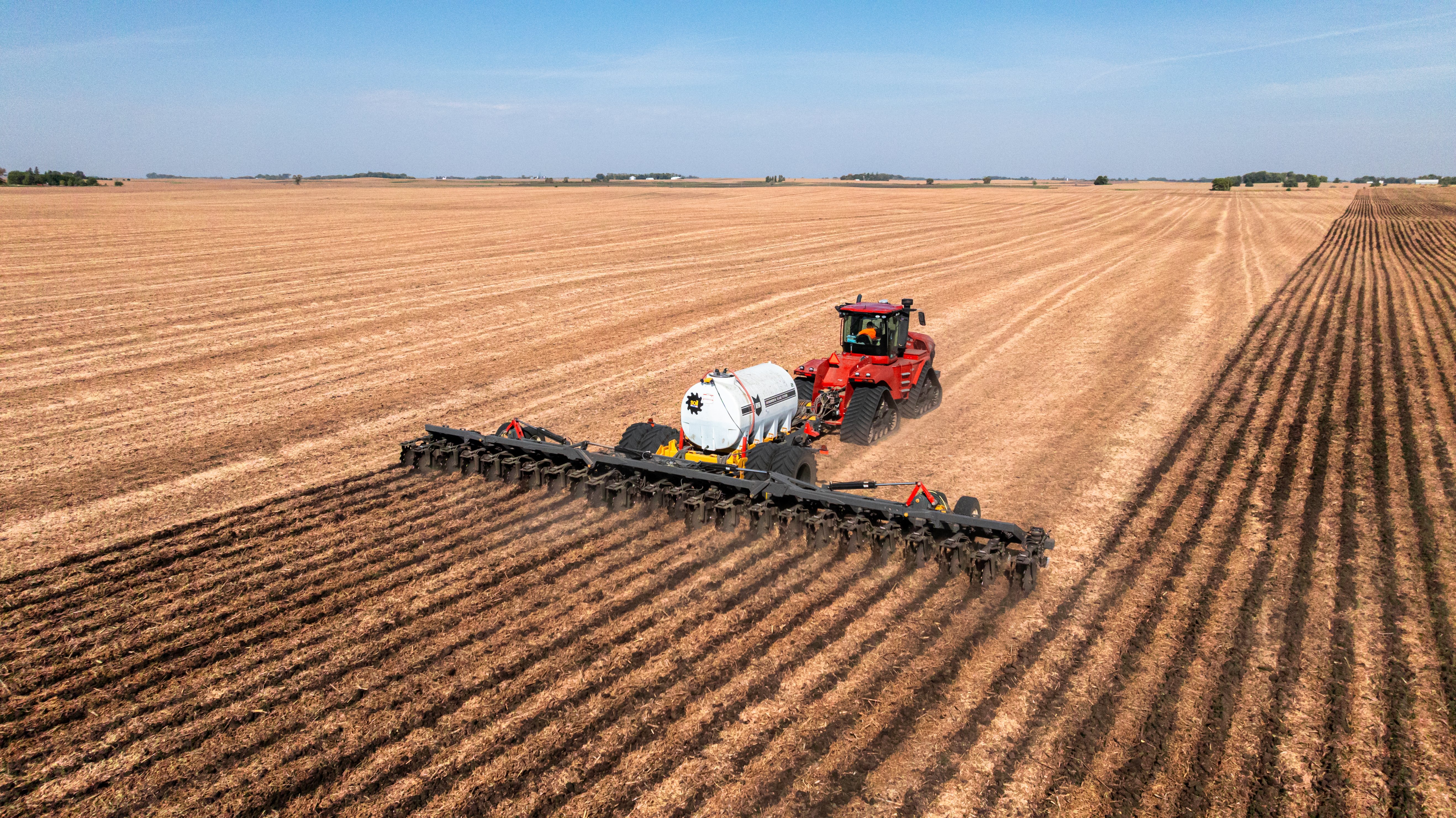
After nearly a decade of custom hiring, they purchased their own strip-till bar in 2014 and committed to 100% strip-tilling. Today, they run a 24-row, all-liquid SoilWarrior system across their 50/50 corn and soybean rotation. But what makes their setup work isn't just the equipment itself. It's how they've customized it to meet the specific needs of their farm.
The Edge Row Unit with Liquid: A Configuration That Works for Their Farm
Their current setup is built around a 24-row configuration with an Edge row unit and shank system. Because they run an all-liquid system, they also have the flexibility to manage fertilizer applications across multiple passes.
In the fall, Garrett uses the shank system to apply a variable rate of 4-10-10 to address phosphorus needs. The local co-op then applies potash to meet the farm's potassium needs.
In the spring, Garrett removes the shanks and runs the coulters to freshen the strips going to corn. During this pass, he applies variable-rate 32% nitrogen directly into the strip, placing it where the crop needs it.
"Putting it all right in the strip, right where the seed is, has worked the best for us," Garrett explains. "It's nice to get it in the ground and have it covered up with soil right away, so you don't have to worry about volatilization."
The spring pass also gives Garrett flexibility when conditions aren't ideal. If the ground is wet, he can freshen the corn ground going into beans to break up the surface crust and help dry things out.
It's a setup that allows the Asmus family to adjust their equipment and approach based on the season, crop rotation and field conditions.
Customization That Makes a Difference
No two farming operations are exactly alike. That's why having equipment that can be configured around specific needs matters. Garrett's SoilWarrior is a good example of that flexibility. His 24-row, all-liquid configuration, Edge row units and removable shank system allow him to accomplish different objectives throughout the year without relying on multiple pieces of tillage equipment.
The ability to adjust the machine between fall and spring applications helps Garrett make the most of each pass while keeping his nutrient placement strategy aligned with his operation.
His experience also highlights another important consideration: matching equipment to the tractor pulling it. With their fall applications and one spring pass on corn ground, Garrett estimates they're spending fewer than 200 tractor hours on tillage.
"It's like combining your spreader pass, your ripper pass and your cultivator pass all into one trip through the field," Garrett says.
A Partner Built on Reliability
For the Asmus family, equipment performance is only part of the equation; having a reliable partner and dependable service matter just as much.
After running other strip-till bars in the past, Garrett says the decision to stick with SoilWarrior came down to reliability, durability and the service behind the equipment.
"We have run other bars in the past, but the reliability and durability is unmatched with SoilWarrior, not to mention the top-notch service. A couple of years ago when we needed a bigger bar, there was no question — we would be choosing SoilWarrior."
When breakdowns have happened, Garrett says the ETS service team has been quick to respond and get them back in the field.
"When the few breakdowns we have had over the past 10 years have occurred, we have never been down long. The techs are always out promptly and can get us back rolling quickly," he says. "We put our trust in SoilWarrior and know their dedication to a quality product and top-notch service are second to none."
Thinking About Making the Switch to Strip-Till?
After more than 20 years of strip-tilling, Garrett knows there's always something new to learn. His advice to farmers considering the transition? Don't be afraid to give it a try.
"Don't sit back and want to strip-till and just never make the decision," he says. "If you want to try it, maybe custom hire a guy for a year or two. Try it out and see if you like it. You won't learn until you do it. And 24 years in, we're still learning."
He also encourages growers to think through the management changes that come with strip-till, especially around residue management and planting accuracy. Without full-width tillage to incorporate residue, planters need to be equipped to handle what's left on the surface. Accurate GPS guidance is also important when working with narrow strips that need to line up with the planter.
For Garrett, the transition has been worth the investment in time, equipment and learning.
And his SoilWarrior is proof that strip-till doesn't have to look the same on every farm. With customizable configurations, adaptable row units and fertilizer delivery options, SoilWarrior can be built around your operation's specific needs.
Thinking about making the switch? Explore how a SoilWarrior could look on your farm with our builder tool or contact our team to start your SoilWarrior journey.




Comment